
We treat the whole person.
We can help you in your health and healing journey with all types of orthopedic, neuromuscular, and musculoskeletal issues with your tissues. We’ve highlighted a few below.
Vestibular Dysfunction
The vestibular system is comprised of the brain, inner ear, vision & sensation, and they all work to maintain your body’s balance. If the system is damaged, the body’s balance is affected.
Vestibular Hypofunction
Vestibular hypofunction is when the hair cells of the inner ear become damaged on one side or both. It can mimic BPPV. PT can help the brain create new pathways through neuroplasticity to maintain balance and reduce dizziness.
Labyrinthitis
Labyrinthitis is inflammation of the inner ear. Once it is stable, PT can help retrain the brain and inner ear system to work together.
Vestibular Migraine
Vestibular migraine can come with or without headaches, but it causes episodic dizziness, motion and light sensitivity, impaired balance, and impaired gaze. PT can help improve the response between the inner ear and brain to reduce symptoms.
Coccyx (Tailbone) Pain/Fracture
Many of the pelvic floor muscles attach to the coccyx. When those muscles are tight the coccyx gets pulled forward and can cause pain. Working on those muscles both internally and externally can help alleviate pain.
Benign Paroxysmal Positional Vertigo (BPPV)
BPPV happens when the crystals of the inner ear break free and float into the canals. This can cause vertigo, nausea, and balance impairments.
Bowel & Bladder Dysfunction (BBD)
About half of U.S. women and 1 in 7 U.S. men have urinary incontinence.1 Bowel & bladder issues often come from nerve or muscle dysfunction and are highly treatable.
SI Joint Dysfunction
Sacroiliac joint dysfunction can cause lower back, hip, and leg pain. Causes of SI joint dysfunction include hypermobility, pregnancy, injury, and arthritis.
Hip & Low Back Pain
Having lower back pain is common.2 The pain can range in severity and affect your mobility as well as quality of life.
Pelvic Pain
You are not crazy
One of the many jobs of the pelvis is to transfer load across it. Because of that mechanism, pelvic pain often travels from side to side or even front to back.
You are not alone
Research shows that up to 26.6% of women experience chronic pelvic pain.3
Physical therapy can help
Physical therapy can be an excellent path to pain relief. The pelvis is made up of many muscles; when those muscles don’t function properly, pain and dysfunction can occur.
Sexual Trauma
Sexual trauma affects millions of people.4 With stats that high why are victims of assault so alone during their journey? We are here to help. Sexual trauma often manifests as physical pain. The body keeps the score. We have therapists specially trained as members of an interdisciplinary team to help the body process that trauma.
Myofascial Release Therapy
By using specific hands-on techniques, trigger points and tight muscles can be mobilized to help alleviate pain.
Sex Counseling
Learning about your own anatomy, sexual response, and triggers can be an effective way to help regain your power.
Referrals and Recommendations
Not sure where to start on building your healthcare team? We can help you find amazing counselors, gynecologists, urologists, and other mental health practitioners to help you along the way.
Parkinson’s Disease
LSVT programs have been developed and studied for more than 25 years, with research funded in part by the National Institutes of Health.56
The program is 4 consecutive days per week for 4 consecutive weeks.5
What the research shows
In a randomized trial, LSVT BIG improved movement scores and walking speed more than a walking program or home exercises.7
Bladder Issues
30-40% of people with PD have bladder issues.8
Fluctuations in dopamine and impeded nerve signals are often the culprit and can lead to symptoms such as urinary urgency, hesitancy, incomplete emptying, and increased night time urination. There are many treatments available to help with these symptoms including tibial nerve stimulation, myofascial release of the pelvic floor and bladder retraining.
Constipation
PD can cause the nerves in the intestine to slow down in much the same way as it affects the brain and spinal cord. When movement in the intestines, known as motility, slows down, stool can start to back up in the colon. The colon absorbs water from stool.9 The longer stool sits there, the more water is absorbed and the harder the stool gets. This can lead to impaction, bloating, and abdominal discomfort. We can help! Bowel massage is a great way to help stimulate that movement!
Men’s Health
Men have pelvic floors too! Whether you are dealing with urinary incontinence after prostate surgery, pelvic pain from prostatitis, or erectile dysfunction; we are here to help!
You are not alone
Erectile Dysfunction
There are many causes for erectile dysfunction including muscle weakness and nerve impingement. Pelvic PT can help improve nerve flow to the genitals through myofascial release and functional dry needling.
Hypermobility
Joint hypermobility means that some or all of a person’s joints have an unusually large range of movement. You may have heard it referred as being double jointed. Joint hypermobility syndrome is when you have very flexible joints and it causes you pain. JHS is part of a spectrum of hypermobility disorders which includes Ehlers-Danlos syndrome.
People who have Ehlers-Danlos syndrome usually have overly flexible joints. Because the connective tissue that holds joints together is looser, your joints can move far past the normal range of motion and cause joint pain & dislocations.
Pain relief
Relieving pain where possible through the use of hot/cold packs, soft tissue work including gentle stretching & massage, and electrotherapy (Transcutaneous electrical nerve stimulation (TENS)).
Posture and motor control
Motor control exercise is a popular form of exercise that aims to restore co-ordinated and efficient use of the muscles that control and support the spine.
Muscle strengthening
Joint stability, muscle strength and improving dynamic muscle control should help to support and minimize trauma to joints.
External support
Support in the form of a brace or tape can be helpful to support a weakened joint to allow movement and also aid healing and restore balance.
Pregnancy
Being pregnant does not have to mean being in pain.
Pregnancy brings on many changes in the body. Your body is rapidly changing and with those changes oftentimes musculoskeletal issues arise. Hormones are often the culprit but pelvic physical therapy can play a significant role in helping you be pain-free.
Prenatal Yoga
Developing flexibility and mindfulness can be incredibly beneficial during pregnancy. Our therapists are skilled at safe prenatal yoga flows to help you move better and feel better.
Strength Training
Improving strength and endurance during pregnancy has a direct carry-over once your bundle of joy arrives. Staying fit during pregnancy can also help you through the delivery!
Education
Need advice on the best positions to labor in? Are you concerned about what changes your body will experience after delivery? We are here to help!
Common Doesn’t Equal Normal
- Sciatic Nerve Pain
- Low Back Pain
- Urinary Incontinence
- Pain with Sex
Postpartum
Did you know that the first 3 months of postpartum are considered the 4th trimester?1314 Your body has gone through a significant event. Pelvic PT can help you recover!
You Deserve More
Every mom deserves a postpartum fitness evaluation. You deserve more. You deserve to know when your body is safe to return to running, lifting, jumping, and all the activities you enjoyed prior to and during pregnancy. We are here to help!
Pelvic Girdle Pain
Hormones released during pregnancy, including prolactin, reduce ligament laxity but can cause the joints to feel stiff.
Urinary Incontinence
Leaking urine after you have a baby is a common issue.15 However, common doesn’t equal normal. This is likely a muscle issue that PT can help resolve.
Neck Pain
Nursing can be a rewarding bonding experience with your baby. But all of that looking down at your little one can take a toll on your neck and back. Is your bra giving you the right amount of support? How’s your posture? Let us help!
Therapeutic Ultrasound
Therapeutic ultrasound may help with clogged ducts by easing inflammation and swelling. And the treatment itself takes only about 5 minutes!16
Constipation Management
Bowel massage and vagus nerve stimulation are great ways to help get things moving!
Infrared Light Therapy
Infrared light focused on the scar tissue at the vulva or abdomen can help increase blood flow and aid in pain and tissue healing.
Common Doesn’t Equal Normal
- Free childcare available during your appointment!
- You don’t have to avoid the trampoline forever!
- Pain with sex isn’t normal!
Pediatric Pelvic Health
Bedwetting, constipation, and bathroom accidents can be frustrating for children and their families. But these challenges are more common than many parents realize, and they aren’t always something children simply outgrow.1718
At Gadsden Pelvic Rehab, we provide specialized pediatric pelvic health physical therapy to help children improve bladder and bowel function, develop healthy bathroom habits, and feel more confident in their daily lives.
Treatments tailored to you
Every plan is individualized. These are some of the tools your therapist may use.
-
Myofascial release
Hands-on techniques that mobilize trigger points and tight muscles.
-
Functional dry needling
Used alongside myofascial release to improve nerve flow and ease pain.
-
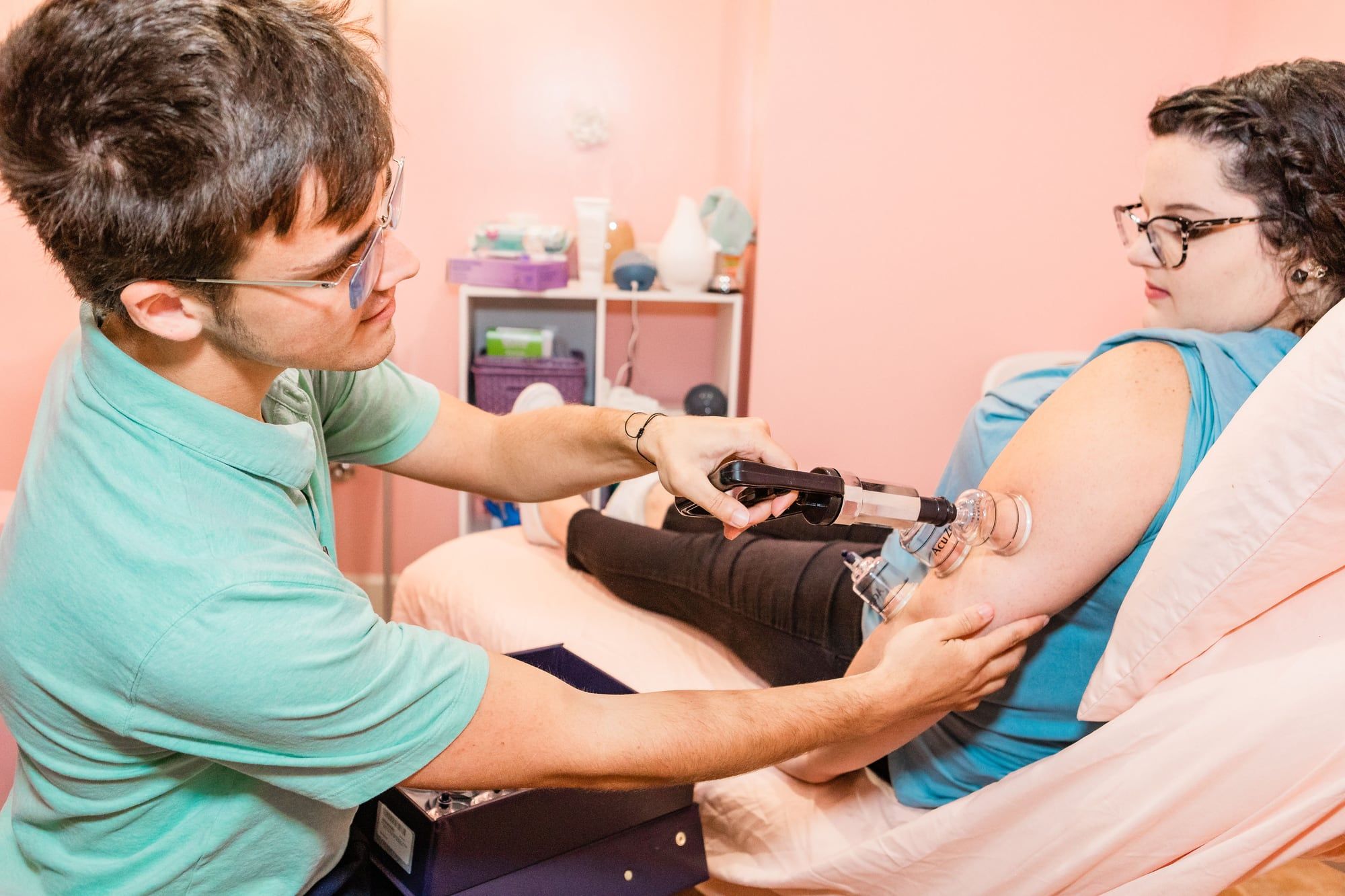
Cupping
A soft-tissue technique we use to help tight, restricted tissue move.
-
Tibial nerve stimulation
One of several options for urinary urgency and frequency.
-
Bowel massage & vagus nerve stimulation
Great ways to help get things moving with constipation.
-
Therapeutic ultrasound
May ease the inflammation and swelling behind a clogged duct, in about 5 minutes.16
-
Infrared light therapy
Increases blood flow to scar tissue to aid pain and tissue healing.
-
Prenatal yoga & strength training
Safe flows and strength work to move better through pregnancy.
-
LSVT BIG
Intensive, research-backed movement program for Parkinson’s disease.7
-
TENS & taping
Pain relief and external support for hypermobile or unstable joints.
Looking for speech therapy? See our speech therapy referral.
Sources
- Prevalence and trends of urinary incontinence in adults in the United States, 2001 to 2008. Journal of Urology (Markland et al.), 2011. (opens in a new tab)
- Low back pain (fact sheet). World Health Organization, 2023. (opens in a new tab)
- Prevalence of chronic pelvic pain among women: an updated review. Pain Physician (Ahangari), 2014. (opens in a new tab)
- About Sexual Violence. Centers for Disease Control and Prevention, 2025. (opens in a new tab)
- LSVT BIG. LSVT Global. Accessed October 2026. (opens in a new tab)
- 30 Years of LSVT Training: Empowering Therapists, Transforming Lives. LSVT Global. Accessed October 2026. (opens in a new tab)
- Comparing exercise in Parkinson’s disease: the Berlin LSVT BIG study. Movement Disorders (Ebersbach et al.), 2010. (opens in a new tab)
- Urinary Problems in Parkinson’s Disease. Parkinson’s Foundation. Accessed October 2026. (opens in a new tab)
- Your Digestive System & How It Works. National Institute of Diabetes and Digestive and Kidney Diseases (NIH), 2017. (opens in a new tab)
- Prostatitis: Inflammation of the Prostate. National Institute of Diabetes and Digestive and Kidney Diseases (NIH), 2014. (opens in a new tab)
- Male Urinary Incontinence: Prevalence, Risk Factors, and Preventive Interventions. Reviews in Urology (Shamliyan et al.), 2009. (opens in a new tab)
- Impotence and its medical and psychosocial correlates: results of the Massachusetts Male Aging Study. Journal of Urology (Feldman et al.), 1994. (opens in a new tab)
- ACOG Committee Opinion No. 736: Optimizing Postpartum Care. American College of Obstetricians and Gynecologists, 2018. (opens in a new tab)
- The fourth trimester: a critical transition period with unmet maternal health needs. American Journal of Obstetrics & Gynecology (Tully et al.), 2017. (opens in a new tab)
- Prevalence, incidence and bothersomeness of urinary incontinence between 6 weeks and 1 year post-partum: a systematic review and meta-analysis. International Urogynecology Journal (Moossdorff-Steinhauser et al.), 2021. (opens in a new tab)
- Clinical Protocol #36: The Mastitis Spectrum, Revised 2022. Academy of Breastfeeding Medicine, 2022. (opens in a new tab)
- Definition & Facts for Bladder Control Problems & Bedwetting in Children. National Institute of Diabetes and Digestive and Kidney Diseases (NIH), 2017. (opens in a new tab)
- Prevalence of Functional Defecation Disorders in Children: A Systematic Review and Meta-Analysis. Journal of Pediatrics (Koppen et al.), 2018. (opens in a new tab)
You don’t have to just live with it
Give us a call to make your appointment.
Free childcare during your session
Rainbow City
2425 Lumley RdRainbow City, AL 35906 (256) 467-3057
Monday – Thursday
7am – 5pm
Friday
7am – 12pm