
What is vaginismus?
Signs of vaginismus
- Pain, burning, or stinging when something enters the vagina
- Trouble using tampons or getting through a pelvic exam or Pap test
- Penetration during sex that is painful, difficult, or not possible
- Feeling anxious about sex, or about the pain ahead of time
It can start even if penetration used to be comfortable.1
Why it happens
The reasons aren’t always clear. Things that can play a part include anxiety or fear about sex, a past painful experience, sexual assault or abuse, a difficult exam or birth, or a painful medical condition.1 Sometimes no cause is found.2
How we can help
Treatment usually combines physical therapy, education, counseling, and exercises, including gradual practice with vaginal dilators.2 In a review of treatment studies, women with vaginismus improved with a range of treatments in almost 80% of cases.4
You set the pace
Nothing happens without your consent, and you can stop at any time.
Relaxing the pelvic floor
Breathing and relaxation work to help tight muscles let go.
Vaginal dilators
Step-by-step practice that helps your body get used to penetration gradually.
Education and support
Understanding how your body works, and, with your permission, working with your doctor or a counselor.
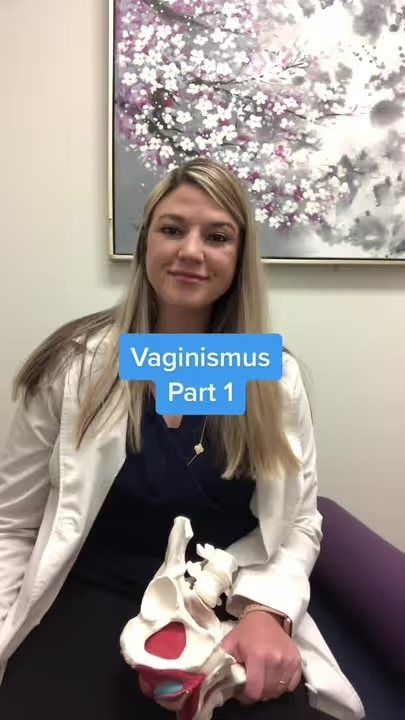
Vaginismus, explained
Short videos from Dr. Jazma’s TikTok, where 175K+ people follow her for straight talk about pelvic health.


Questions we hear
Is vaginismus my fault?
No. Vaginismus is an automatic reaction you don’t have control over.1
Will my first visit include an internal exam?
Only if you’re ready and you agree. Your therapist will talk with you first and explain each step before it happens, and you can stop at any time.
Sources
- Vaginismus. NHS (UK National Health Service). Accessed November 2026. (opens in a new tab)
- Vaginismus. MedlinePlus (U.S. National Library of Medicine). Accessed November 2026. (opens in a new tab)
- The experiences of women seeking help for vaginismus and its impact on their sense of self. Women’s Health (Pithavadian et al.), 2023. (opens in a new tab)
- Outcome of Medical and Psychosexual Interventions for Vaginismus: A Systematic Review and Meta-Analysis. Journal of Sexual Medicine (Maseroli et al.), 2018. (opens in a new tab)